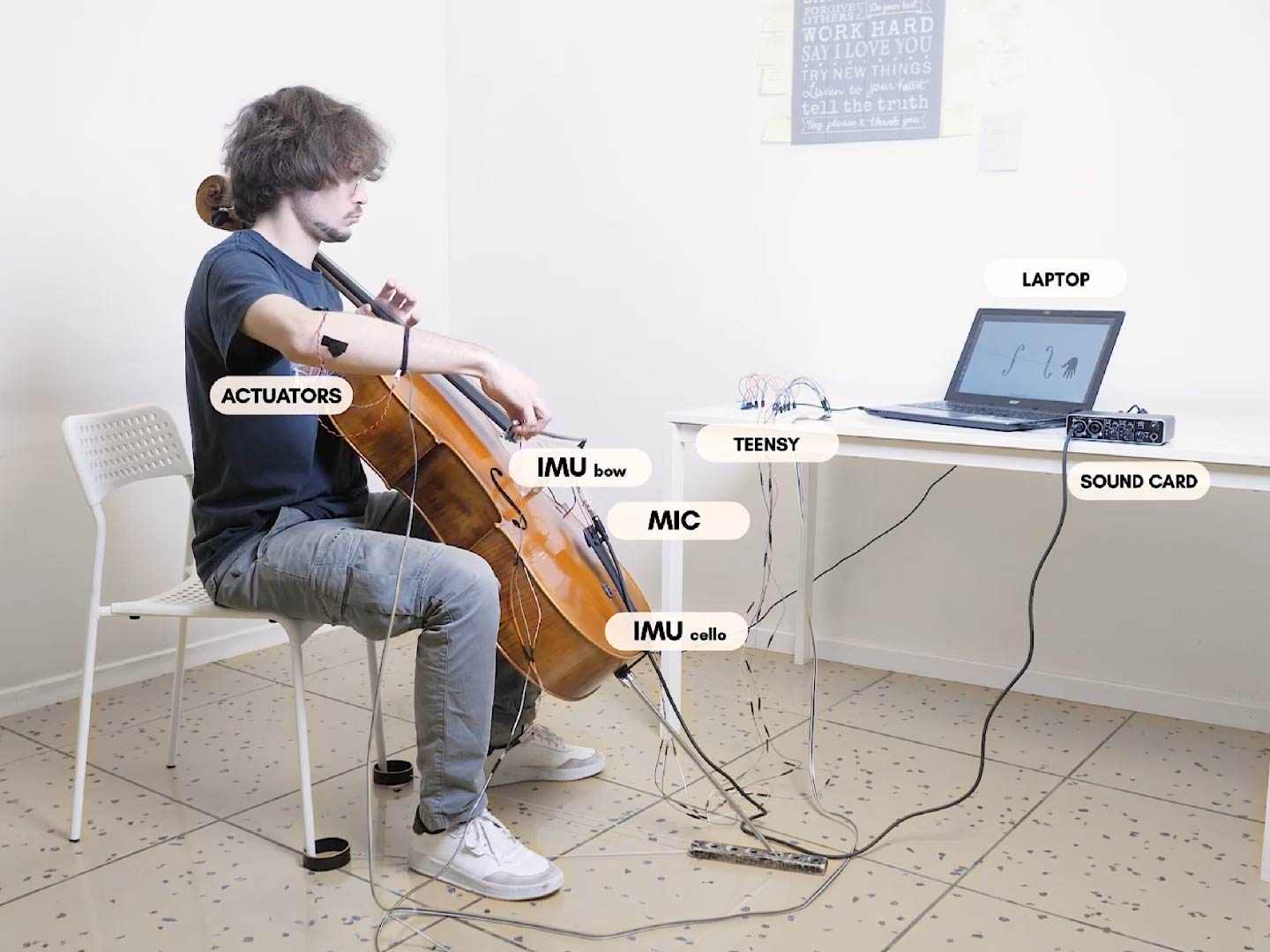
A multi-sensory interactive tool designed to help both beginner and advanced cello players in training one of the most difficult tasks when playing cello: the bow usage. I developed a physical prototype by using sensors (microphones, IMUs) to capture information about the real-time position of the bow. Then, I exploited the user’s vision and touch sensory modalities by providing both haptic and visual feedbacks. These feedbacks nudge the user to correct the bow position.
user test
education
music
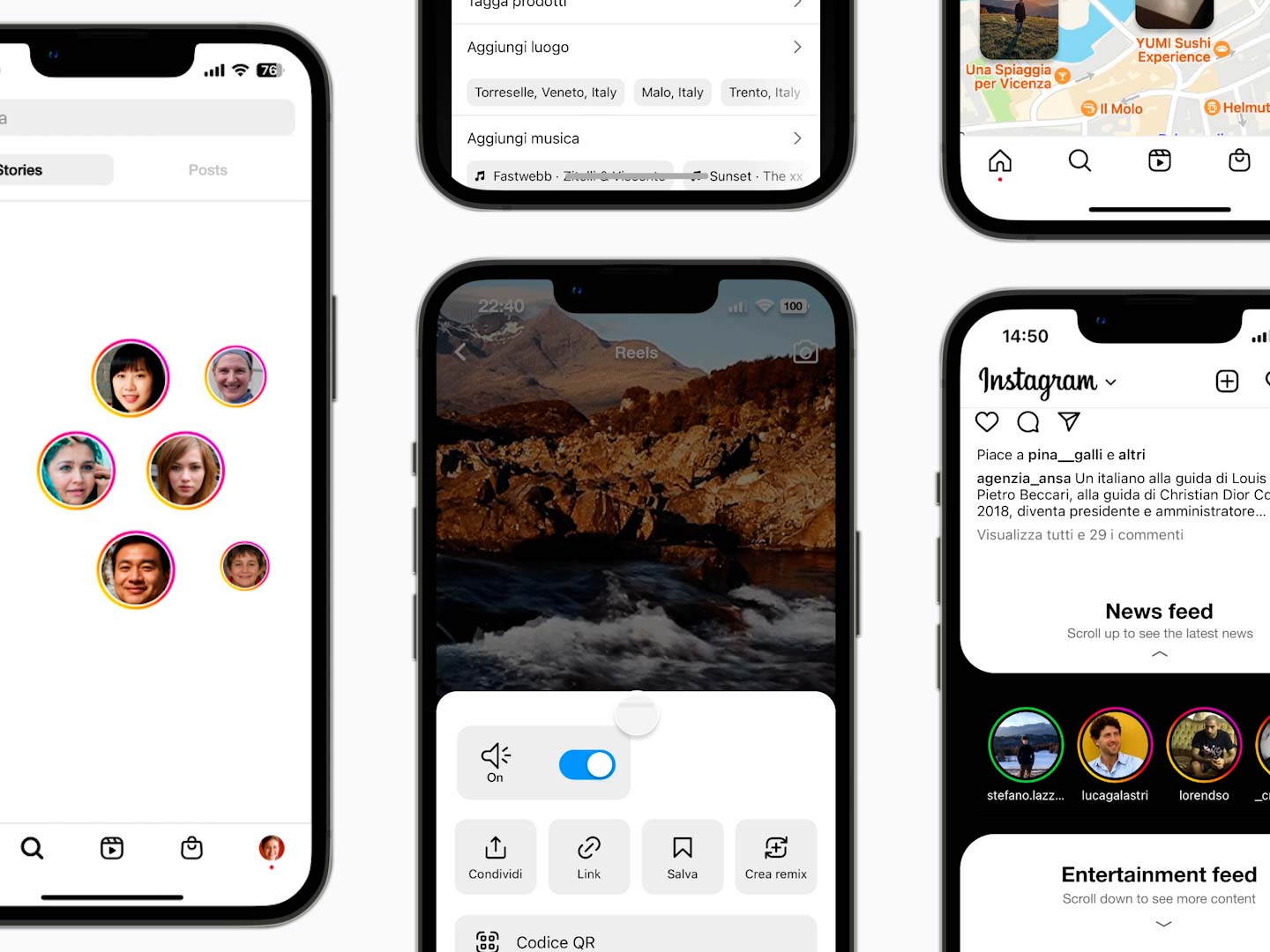
This project explores new possible ways to perform microinteractions within an already existing application (Instagram). Different alternatives are proposed by employing high fidelity prototypes made with Figma. The general idea behind this redesign is to provide visual and objective material (prototypes) for generating a discussion within an hypothetical design team.
microinteraction
prototype
micro design
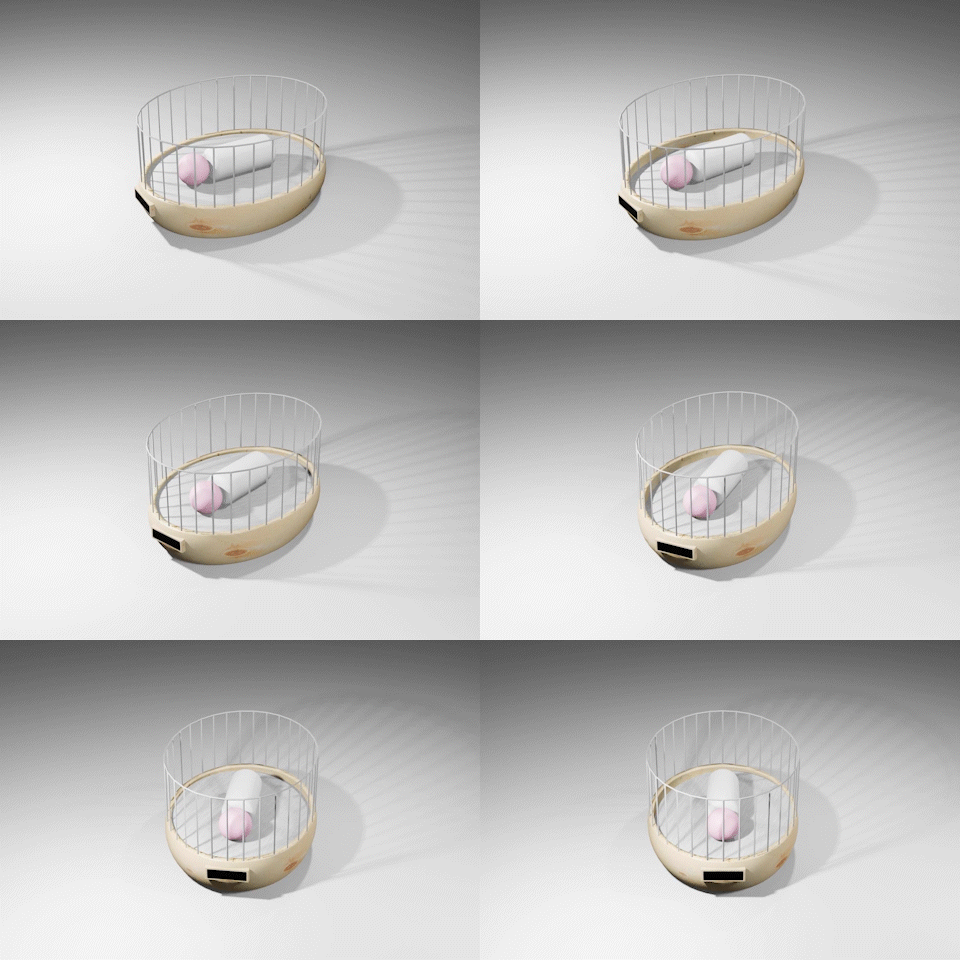
A prototype of an intelligent cradle, designed and delivered in just 4 hours during the Co-creation Hackathon, organized by HIT Foundation and Trentino Sviluppo, as part of the European “iProduce” project. Although this case-study is less articulated than others, I decided to include it in this portfolio because it shows how I work under high time-pressure situations. The final project was delivered through multiple prototyping tools: a 3D model of the cradle, a prototype of its digital interface and an Arduino based mechanism.
3D modeling
rapid prototyping
hackathon
An educational app meant to assess learning capabilities through playful interactions in 8-10 y.o. children. In developing this project, I faced 2 main challenges: first, creating an engaging storytelling throughout the game, second, making an effective tutorial which could be easily understandable by a child. Gamification is a fundamental aspect of UX design. Through this project, I learned how it can be exploited in the educational technology field.
learning disorder
gamification
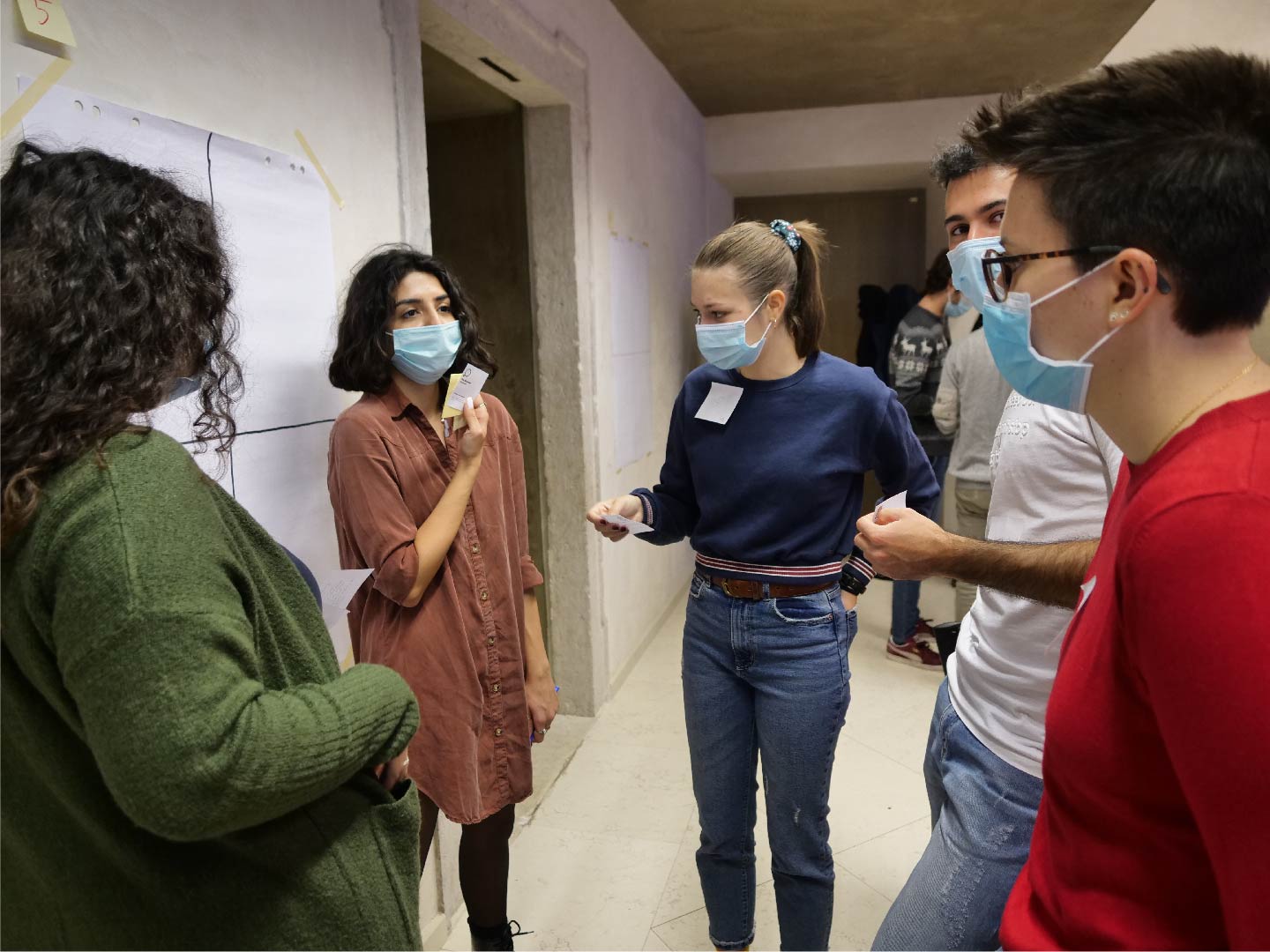
A qualitative UX research on students’ learning experience during COVID-19 pandemic. It was conducted adopting semi-structured interviews, focus-groups and ethnographic observations. Managing a whole qualitative research process can be very tough and time-consuming, especially when users are involved in activities such as participatory design workshops. This experience helped me in gaining some fundamental skills in extracting useful insights from first-person qualitatively collected data.
digital wellbeing
social research
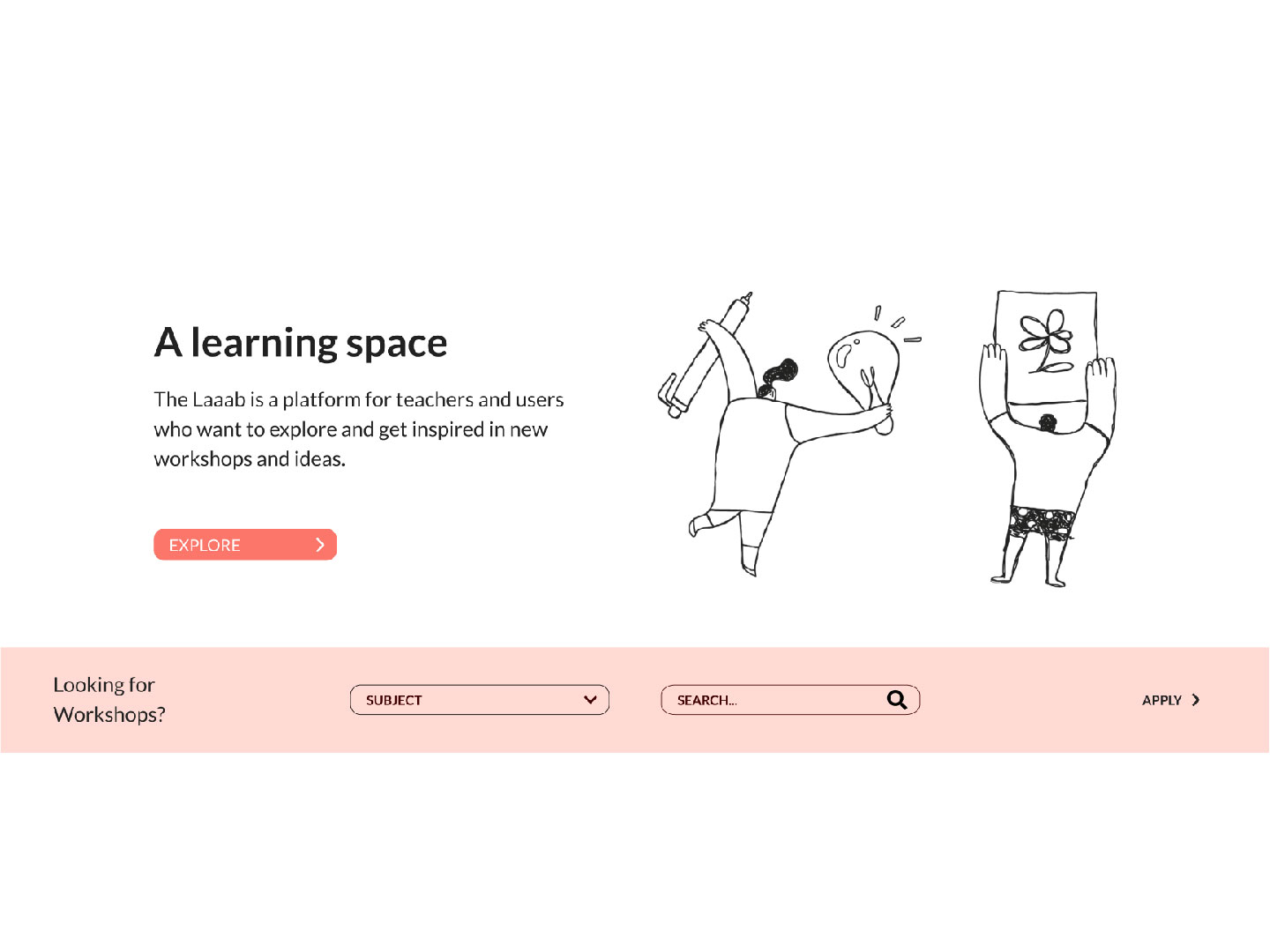
The Laaab is an online platform for teachers willing to provide innovative learning experiences to their students and creators (such as workshop moderators, science communicators, game designers) who want to share their knowledge. In this project I focused on the UI aspects through the design of a prototype using Figma.
visual design
UI
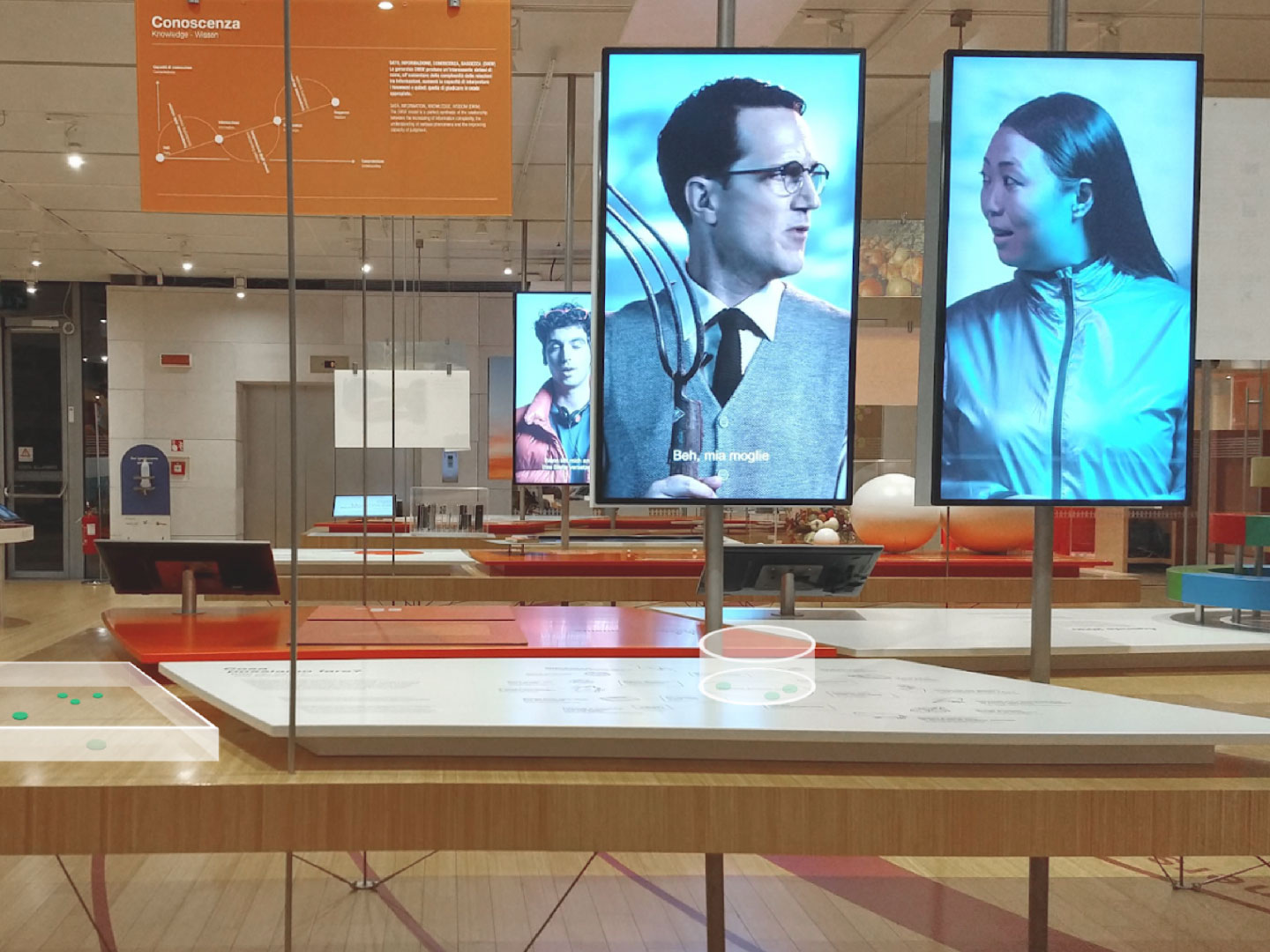
MUSE include is a redesign proposal based on universal design principles. “Include” stands for inclusivity, because It addresses some accessibility problems (especially for blind people) related to an existing exhibition based in MUSE museum (Trento). The project was developed involving some final users (blind people) and discussed in front of the museum’s curators.
universal design
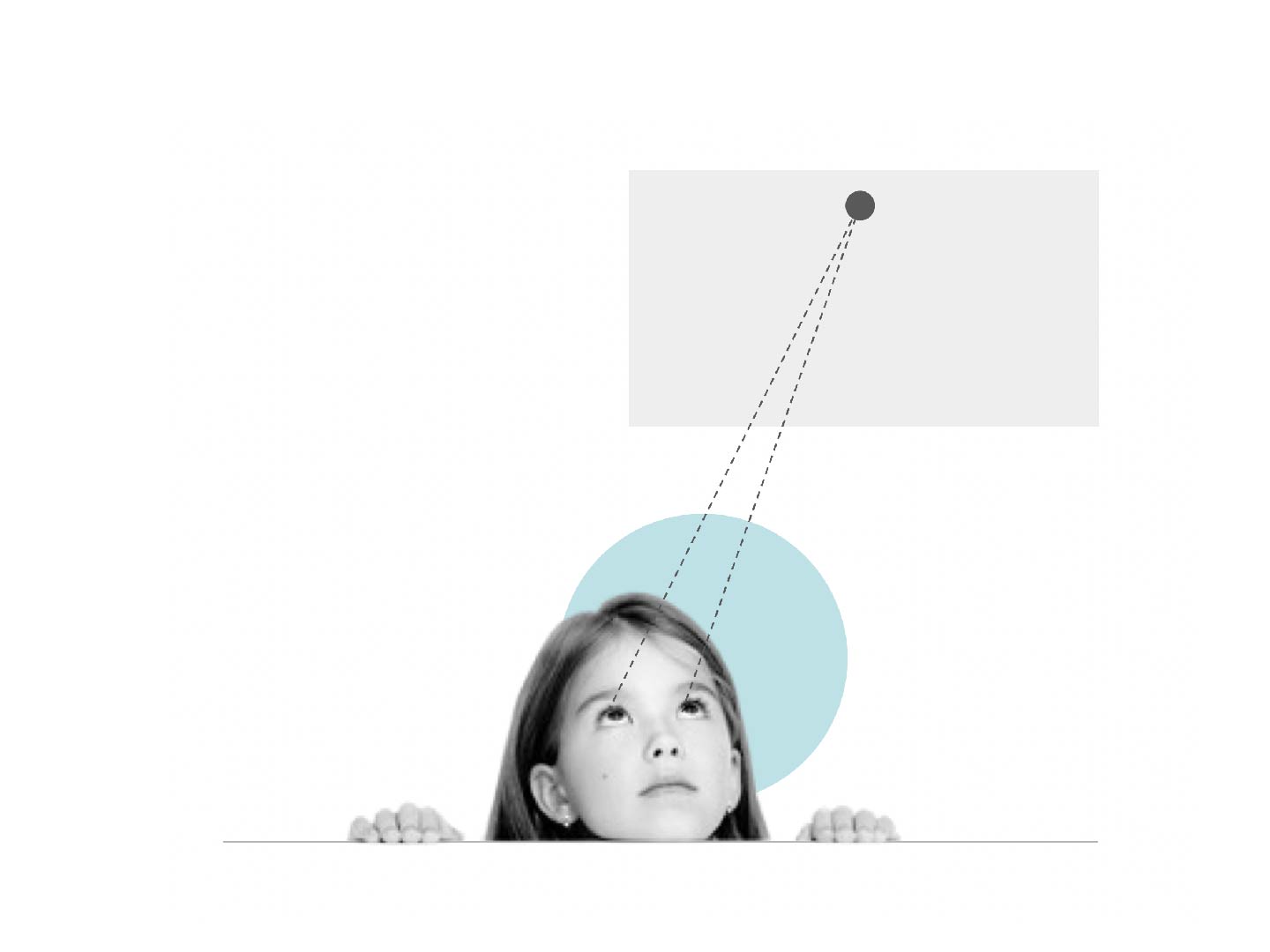
Bimty is a VR-treatment targeting children with antisocial personality disorder. The prototype includes 2 tasks, namely a stroop-test and a complex task designed to highly engage self-inhibition capabilities of children.
gamification
VR